Wordscapes Solitaire
- 4.6
- Rating
- 1.00M
- Installs
- Free
- Price
 Analysis by App-foxy
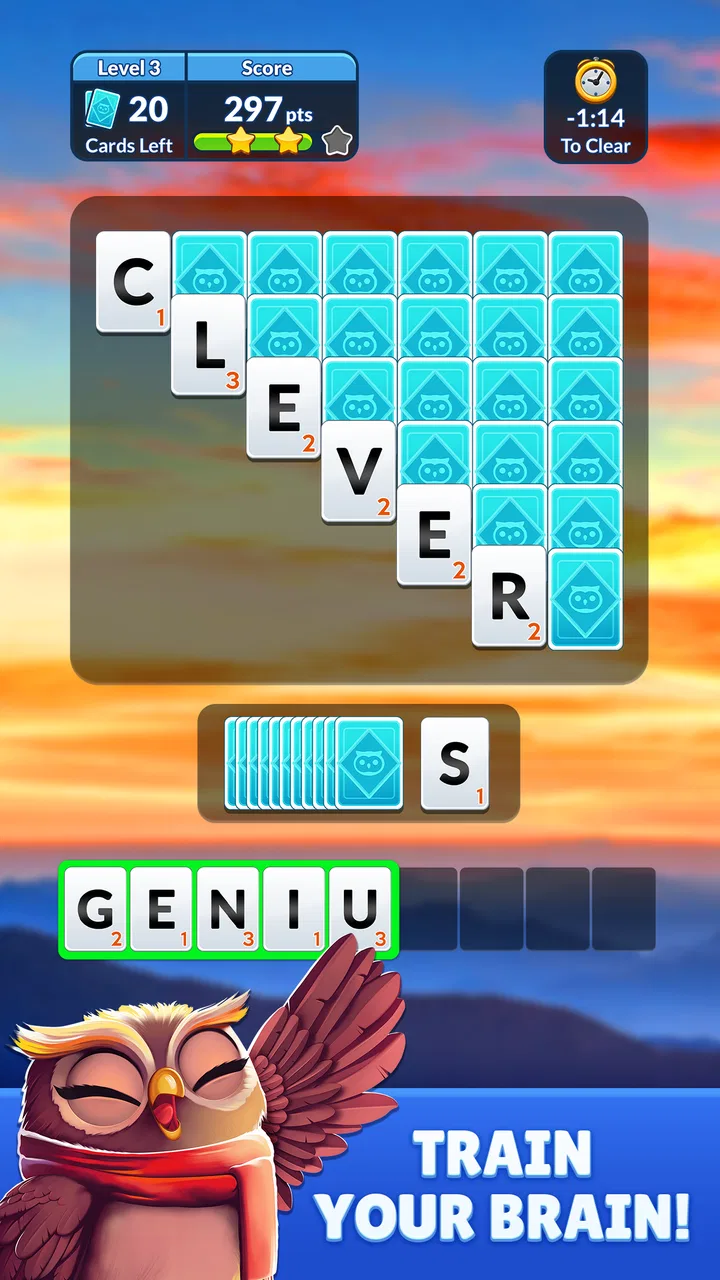
I spent time with Wordscapes Solitaire because its central idea is unusually easy to understand: it brings word puzzles and solitaire together in one relaxing game. That combination sounds simple, but it changes the rhythm of both activities. Instead of choosing between a vocabulary challenge and a quiet card game, I can move between the two styles in the same session, depending on how much concentration I want.
My first impression was that this is best approached as a casual word game with a slower, more reflective side. It is not trying to replace a serious solitaire app, and it is not as demanding as a dedicated competitive word title. Its appeal comes from the way the two familiar formats soften each other. The word puzzles give me something to think about, while the solitaire element provides a gentler change of pace when I want to keep playing without forcing myself to search for answers.
Why the word-and-solitaire combination matters
The most important capability here is not simply having two game types in one package. It is the ability to adjust the mental effort of a session without leaving the app. In a typical word game, I may reach a point where I have found the obvious answers but no longer feel like wrestling with the remaining possibilities. In a typical solitaire game, I may enjoy the calm but eventually want a little more mental involvement. Wordscapes Solitaire sits between those moods.
You May Also Like

 Blood Strike: 2.5 Anniversary
Blood Strike’s Loadouts Turn Every Drop Into a Tactical Gamble
A close look at Blood Strike’s custom loadouts: how fast access to signature weapons reshapes its battle royale rhythm, rewards preparation, and narrows the gap between fights.

 Pandora - Music & Podcasts
Pandora’s Music Is Easy to Start, but Harder to Recover
Pandora’s strength is its low-effort path from a seed to a station. Its weak spot is how much confidence it asks you to place in connection, setup, and quiet recovery.

 8 Ball Pool
 Is Built on Rivalries, Rematches, and Routine
A close look at the rivalries, rematches, shared routines, and unanswered safety questions that turn a quick pool match into a persistent mobile community.

 Samsung Music
’s Quiet Strength Is Playing What You Already Own
Its reach comes less from spectacle than from dependable access to a personal library. That simplicity is both the app’s strongest retention engine and its ceiling.

 AccuWeather: Weather Radar
AccuWeather Review: A Quick, Clear Forecast for Everyday Decisions
For everyday plans, the best forecast is the one you can understand quickly. AccuWeather makes rain timing, radar, and local conditions easy to act on, with a few trade-offs.

 Hill Climb Racing
Why Hill Climb Racing Still Turns Crashes Into One More Run
A tiny car, a bumpy hill and one more upgrade: Hill Climb Racing keeps resurfacing because its simple chaos makes every near-miss feel personal.
More From Our News Desk



That makes it particularly useful for short breaks. I can begin with a word puzzle when I am alert, then use the card side as a reset, or do the reverse after a tiring day. The change feels more purposeful than simply opening another unrelated game. I stay within the same general atmosphere, but the kind of attention required changes.
The word-game foundation also gives the experience more personality than a standard card app. Solitaire alone can become repetitive when the layout and objective are the only things occupying my attention. Here, the vocabulary element encourages me to notice letter patterns, test familiar combinations and think about words I may have overlooked. The card play, in turn, prevents the experience from becoming a constant test of recall or spelling.
I found that this balance works best when I treat the game as a flexible pastime rather than a challenge to finish as quickly as possible. If I rush through every puzzle, I lose the relaxing quality that makes the combination worthwhile. If I linger over every possible word, the session can become more effortful than expected. The strongest part of the design is having that choice available from moment to moment.
How the two activities change the pace of a session
Word puzzles usually ask for active attention. I look at the available letters, form likely words and then decide whether I am missing an obvious answer or chasing an unlikely one. Solitaire asks for a different kind of focus: I look at the current arrangement, consider which move opens the most useful option and avoid spending a move simply because it is available.
That difference is valuable because it gives the session an internal pause. When I am stuck on a word, switching to cards can stop the frustration from building. After a few quieter moves, I can return to the letters with a fresher eye. This is one of the more practical benefits of the combined format, and it is more meaningful than merely having extra content in the same app.
There is also a small psychological advantage. A difficult word puzzle can make me feel that progress has stopped, while a solitaire move often feels immediately understandable. Conversely, when the card arrangement becomes less interesting, a word challenge gives me a clearer reason to re-engage. The two modes cover each other’s weaker moments.
Still, I would not describe the experience as equally deep in both directions. Someone looking for a highly specialized solitaire tool may prefer an app built entirely around card layouts. Someone who wants a large competitive vocabulary system may prefer a dedicated word title. This game is more appealing to people who value the transition between the two than to players seeking maximum depth in only one.
What playing it feels like in everyday use
I can imagine opening it during a commute, while waiting for an appointment or during a short break when I do not want to begin a long game. The format suits moments when I may need to stop suddenly. A word puzzle can be approached in a few minutes, and the solitaire side offers a natural place to pause rather than requiring me to complete a long sequence before putting the phone away.
At home, I found the combination better suited to winding down than to intense gaming. The word side keeps my mind engaged enough to avoid feeling passive, while the card side helps keep the overall mood calm. That makes it a reasonable choice for someone who likes puzzles before bed or wants a low-pressure game alongside a podcast or television show. I would still use the word puzzles when I want full attention, because divided attention makes it easier to miss simple answers.
A useful habit is to decide what kind of session I want before starting. If I have only a few minutes, I focus on whichever mode feels immediately accessible. If I have more time, I alternate deliberately instead of treating the switch as something I do only after getting stuck. That approach makes the central capability feel intentional rather than like two unrelated games placed together.
How it works in practice
PeopleFun is the developer behind the game, and the overall presentation is aimed at accessibility rather than complexity. The store summary describes a combination of word games and solitaire, and that is exactly the lens I would use when deciding whether to try it. It is a free game for Android, with an Everyone content rating, so it is positioned as an easygoing option for a broad audience rather than a niche title aimed at experienced puzzle players.
The word side rewards a methodical approach. I start with the most obvious short words, then use those discoveries to look for longer or less immediately visible combinations. This is more effective than repeatedly tapping random possibilities. When I feel stuck, I mentally reorganize the available letters by familiar beginnings and endings. That small change in approach often reveals a word that was visible all along but did not stand out in the original arrangement.
The solitaire side benefits from a similar discipline. I avoid making the first available move automatically. Instead, I look for moves that expose more cards or preserve flexibility. Even in a relaxed game, this matters: a move that looks productive can remove the only useful option for the next step. The card mode therefore gives the experience a modest strategic layer without turning it into a demanding planning exercise.
One of my favorite ways to use the combination is as a reset loop. I work on a word puzzle until I have exhausted the obvious ideas, switch to solitaire for a while, and then return to the letters. The break is long enough to interrupt tunnel vision but short enough that I still remember the puzzle’s structure. This is a concrete advantage over keeping a separate word app and solitaire app open, where the change of context can feel more disruptive.
Another useful approach is to use the word mode for active play and the card mode for lower-energy periods. For example, I might play words during a lunch break when I want a quick mental exercise, then choose solitaire later when I am tired but still want something interactive. The game accommodates both moods without asking me to learn a new interface or adopt a completely different visual style.
Small habits that make the experience better
I recommend resisting the urge to treat every unsolved word as a failure. The point of the combined format is not to maintain a perfect pace. If I keep forcing guesses after my attention has faded, the word side becomes irritating. Switching modes is not giving up; it is using the game’s main strength properly.
On the card side, I get more from the game when I think one move ahead rather than trying to solve the entire arrangement immediately. I check which action creates the most future choices, especially when several moves appear equally safe. That habit keeps solitaire from becoming mindless tapping and makes the contrast with the word puzzles more satisfying.
I also find it helpful to play without multitasking during the harder word moments. The vocabulary challenge depends on noticing patterns, and background conversation or video can make familiar words seem strangely invisible. If I want a truly casual session, I choose solitaire instead. This distinction helps me avoid blaming the game when the real problem is that I am asking for concentration while doing something else.
The game is available as a free download, with optional in-app purchases ranging from a few cents to nearly one hundred dollars per item. That range is worth keeping in mind before playing regularly. A free entry point makes it easy to test the central idea, but anyone uncomfortable with optional spending should pay attention to purchase prompts and set device-level controls where appropriate. I would not choose this game for a child solely because it is marked Everyone without also checking the purchasing setup on the device.
The best scenario for this particular game
The strongest use case is a person who wants a calm, flexible puzzle break and does not always know in advance how much energy they have. Imagine waiting for a delayed train. At first, I might want to exercise my vocabulary, so I begin with the word puzzles. After several minutes, concentration drops and the same letters stop looking useful. Rather than abandoning the app, I move to solitaire, make a few careful plays and keep the break pleasant.
That scenario shows why the combination is more than a novelty. A single-mode app may force me either to continue with a task I no longer enjoy or to leave and search for something else. Here, the change in activity is built into the experience. The transition is especially helpful for people who like puzzle games but dislike feeling trapped by one level of difficulty or one kind of attention.
It can also work well for families or friends with different preferences, provided everyone is comfortable with the same casual style. One person may enjoy finding words while another prefers the card activity. I would not call it a multiplayer solution, but the two formats make it easier to share the same app with someone whose idea of relaxing play is different from mine.
For older players or anyone returning to mobile games, the familiar ingredients are another advantage. Word puzzles and solitaire do not require knowledge of a fictional universe, a complicated control scheme or a long story. The learning curve is mainly about understanding the particular flow of this title. That makes it less intimidating than many modern mobile games that begin with several systems at once.
When a different app would be better
I would skip this game if my main goal were serious solitaire practice. A dedicated solitaire app is usually the more sensible choice for someone who wants to focus on card layouts, detailed statistics or a broader selection of specialized formats. The combined design is attractive precisely because it does not insist on being only solitaire, but that also means it may not satisfy a card-game purist.
I would also choose a dedicated word game if I wanted highly competitive play, head-to-head pressure or a more extensive vocabulary-focused progression. Wordscapes Solitaire is better for relaxed discovery than for proving speed against other players. If the satisfaction I want comes from leaderboards, timed rounds or a strong competitive community, another category of word game would likely suit me more.
It is less suitable for someone who dislikes switching between activities. The combination is the reason to install it, but it can feel unfocused if I want one clearly defined objective. Players who prefer a clean, single-purpose tool may find the two-part structure less satisfying than a straightforward word or solitaire app.
The trade-offs I noticed after spending time with it
The biggest trade-off is variety versus specialization. Having both word puzzles and solitaire makes the game adaptable, but neither side is the entire identity of the product. I get a broader kind of relaxation, not necessarily the deepest version of either genre. That is a fair exchange for convenience, but it should be understood before downloading.
There is also a difference in mental demand between the modes. The word puzzles can create moments of genuine friction when I cannot see a likely answer, while solitaire may feel much easier by comparison. That contrast is helpful when I want to lower the intensity, but it may disappoint players who expect every part of the game to challenge them equally.
The free model is another consideration. The game costs nothing to start, which lowers the barrier to trying it, but optional purchases can become part of the experience for users who want to spend. Because individual in-app items can range from $0.05 to $99.99, I would approach the purchase system thoughtfully rather than assuming every optional transaction is equally small. The safest routine is to enjoy the free portion first and decide later whether any purchase genuinely improves the way I play.
Device compatibility is fairly broad: the Android version requires Android 7.0 or later. That makes it accessible to many older devices, although performance can still depend on the phone or tablet itself. I would check the operating-system requirement before trying to install it on an especially old device. The current version is 2.2.1, so keeping the app updated is sensible when the platform offers an update.
The game’s broad Everyone rating supports its relaxed positioning, but that does not mean every player will find it equally engaging. Very young users may enjoy the familiar formats, while older players may appreciate the low-pressure structure. Still, vocabulary ability, patience and personal tolerance for optional purchases will shape the experience more than the age label alone.
Who gains the most from the combined format
I think the ideal player is someone who wants a casual word game but does not want every session to feel like a test. You will probably enjoy it if you like spotting letter patterns, making gradual progress and taking a break with cards when your attention changes. It is also a good fit for people who often play in short bursts and want an app that can accommodate both a quick visit and a longer, slower session.
It suits me particularly well when I want something more active than passive scrolling but less demanding than a competitive game. The word puzzles give me a reason to focus, while solitaire gives me a way to continue relaxing when I no longer want to solve language problems. That balance is the feature I would explain to a friend before mentioning anything else.
Players who should think twice are those seeking deep strategy, intense competition or a specialized collection of card games. The same simplicity that makes the app approachable can feel limited if I am looking for complex systems or a strong sense of mastery. I would also be cautious if I am prone to making impulse purchases in free-to-play games, because the available purchase range deserves attention.
The game has built a substantial audience, with an average rating of 4.6 from around 220 thousand ratings and more than 1 million installs. Those figures suggest that the basic combination has broad appeal, although popularity alone does not make it the right choice for every type of player. My own recommendation is based more on the usefulness of the mood shift between words and cards than on the size of its audience.
After trying it, I see Wordscapes Solitaire as a thoughtful casual option rather than a replacement for every word or solitaire game. Its real strength is the ability to change the kind of attention a session requires without making me leave the app. If that flexibility sounds appealing, the free starting point makes it easy to explore. If I want a specialized, competitive or highly strategic experience, I would look elsewhere. For relaxed puzzle breaks with a built-in change of pace, though, Wordscapes Solitaire is an easy recommendation.
FAQs for Wordscapes Solitaire
01What is Wordscapes Solitaire and how does it differ from traditional solitaire games?
Wordscapes Solitaire combines the classic card game with word puzzle elements. Unlike traditional solitaire, this game requires players to form words using a given set of letters to progress. This unique blend offers a fresh challenge for fans of both genres, enhancing cognitive skills while still delivering the satisfying gameplay of solitaire.
02Is Wordscapes Solitaire suitable for all ages?
Yes, Wordscapes Solitaire is designed to be family-friendly and suitable for players of all ages. The game features simple mechanics and an intuitive interface, making it easy for both young players and adults to enjoy. However, younger children may need assistance with more complex word puzzles.
03Does Wordscapes Solitaire require an internet connection to play?
Wordscapes Solitaire can be played offline, allowing users to enjoy the game without an active internet connection. This makes it an excellent choice for playing on-the-go or in areas with limited connectivity. However, some features, like updates or leaderboards, may require online access.
04Are there in-app purchases in Wordscapes Solitaire?
Yes, Wordscapes Solitaire offers in-app purchases. These typically include items such as hints, ad removal, or special packs that can enhance gameplay. While the game is free to download and play, spending is optional, and players can progress through the game without purchases.
05How does Wordscapes Solitaire handle difficulty progression?
The game features a well-balanced difficulty progression system. It starts with easier levels to help players get accustomed to the mechanics, gradually increasing in complexity. This ensures a challenging yet rewarding experience, keeping players engaged as they develop their skills and expand their vocabulary.
Pros
- Beautiful graphics enhance gameplay.
- Relaxing soundtrack complements the experience.
- Offers daily challenges for extra rewards.
- Easy to learn
- hard to master.
- Offline mode available for on-the-go play.
Cons
- Ads can be quite intrusive at times.
- In-app purchases can add up quickly.
- Limited hints without spending money.
- Some levels feel repetitive after a while.
- Occasional crashes on older devices.

Wordscapes Solitaire
Gallery